
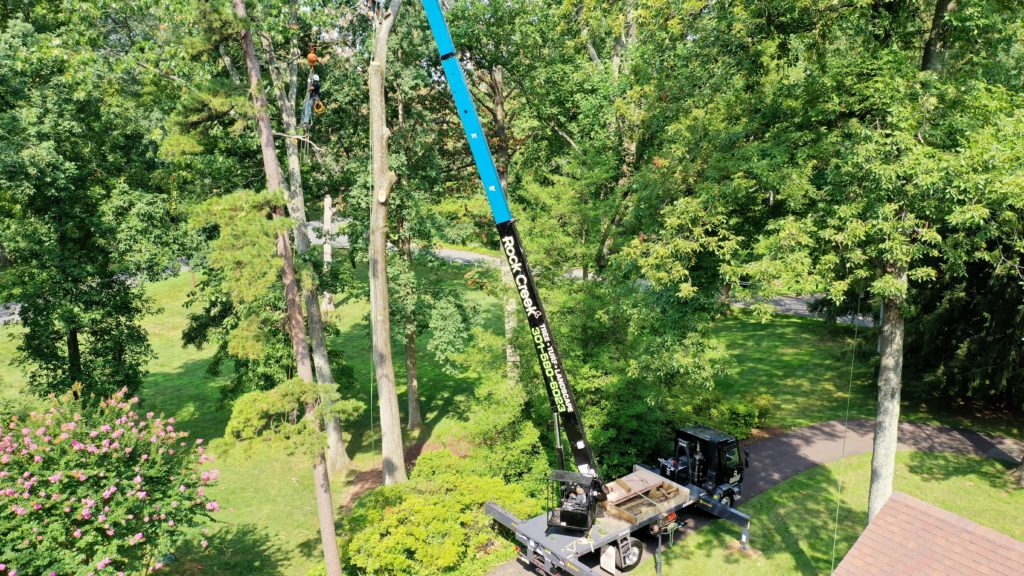
One storm, some high winds, or a patch of eroded soil can turn a perfectly normal-looking tree into a real problem. When that happens, you don’t have time to wait around. A fallen limb can block your driveway, punch through your roof, or just sit there threatening to drop at the worst possible moment. That’s exactly when you need emergency tree service—not tomorrow, not next week, but now.
At Rock Creek Tree, Turf & Landscape in Montgomery County, we respond to emergencies every week. It’s not just about showing up fast. It’s about knowing what you’re looking at, making the right call under pressure, and getting the job done without making things worse.
Here’s something most people don’t think about: tree failures involve serious forces like gravity, tension, weight distribution. If you try cutting into a downed tree without understanding how it’s loaded, things can move in ways you don’t expect. That’s why this work needs to be done by people who’ve done it before.
What Qualifies as a Tree Emergency?
Not every tree problem is urgent, but some definitely are. If you’re wondering whether your situation counts, here are the ones we get called out for most:
Trees that are uprooted or leaning badly. If the soil around the base is loose or lifting after a storm, that tree could go at any time. Don’t stand near it, call someone who can figure out how unstable it really is.
Big branches hanging or split halfway through. We call these widow-makers. They look fine until they’re not, and when they come down, they come down hard. These need to be dealt with by someone who knows what they’re doing.
Trees blocking driveways or access roads. If a tree is down across your driveway, you can’t get out, and emergency vehicles can’t get in. That’s a problem that needs solving right away.
Sudden cracks in the trunk. If you see a crack that wasn’t there yesterday, something structural is going wrong inside that tree. It needs to be looked at before it breaks completely.
Trees that sound like they’re about to fall. If you hear popping or cracking sounds coming from the wood, get away from it. That’s the sound of fibers snapping, and it means the tree is failing right now.
These situations are unpredictable and dangerous. Trying to handle them yourself without the right equipment or experience is a bad idea. Leave it to the pros.
Why You Shouldn’t Wait
Tree emergencies aren’t just ugly, they get worse the longer you ignore them. That big branch resting on your roof? It might not crash through today, but if it shifts or the wind picks up, you’re looking at real damage.
Here’s what happens when you delay:
More property damage. A branch that’s resting on your house could slide, roll, or drop farther. The longer it sits there, the bigger the risk.
Higher chance someone gets hurt. Unstable limbs are a hazard to anyone walking underneath. Keep people and pets clear until it’s been taken care of.
Harder removal. The longer you wait, the more complicated the job gets. What could’ve been a straightforward removal might turn into something that needs cranes or extra rigging.
Utility problems. Downed trees love to take power lines and cable with them. That’s not just your problem, it’s the whole street’s problem.
Getting it handled early keeps things manageable and safe.
What Professionals Do Differently in Emergencies
Emergency tree work isn’t the same as regular trimming. There’s no room for guesswork. You have to look at the whole situation, figure out where the pressure is, and plan the cuts carefully.
Before we touch a saw, we’re checking things like:
Where the bind is. If you cut in the wrong spot, the tree can jump, spin, or kick back. We need to see where the weight is sitting so we can control what happens when we make the cut.
Soil conditions. If the ground is soaked, standard rigging might not hold. We sometimes need cranes or other equipment to stabilize things before we start cutting.
What’s nearby. If the tree is leaning toward your house, we’re not just dropping it. We use cranes to lift sections straight up and over so we don’t scratch your siding or take out a window.
Weather. Working at night or in the wind means extra caution with rigging. We slow down, double-check everything, and make sure nobody’s in the drop zone.
Once we’ve assessed all that, we figure out the safest way to take the tree down usually piece by piece instead of all at once.
Equipment and Safety Gear
Emergency tree removal takes more than a chainsaw and a ladder. We use rigging systems to control exactly where heavy wood goes when it drops, cranes or bucket trucks to get to high spots without putting climbers at unnecessary risk, high-power chainsaws that won’t bind up in high-tension cuts, and full PPE—helmets, chaps, eye protection, the works.
This setup lets us work efficiently while keeping everyone safe and your property intact.
After the Immediate Risk Is Gone
Once we’ve gotten the dangerous part off your roof or out of your driveway, there’s still cleanup left to do. We clear the debris so you can actually use your yard again, check nearby trees to make sure the storm didn’t weaken them too, grind stumps if needed so you don’t have a tripping hazard or an eyesore, and talk through replanting options if your yard’s looking empty now.
We don’t just handle the emergency and leave. We help you figure out what comes next so your property gets back to normal.
Preventing Future Emergencies
Some tree emergencies are just bad luck—a freak storm, a sudden wind event. But a lot of them build up over time, and you can catch them early if you’re paying attention.
Things that help:
Regular inspections. A certified arborist can spot rot, hollow spots, and weak points before they become hazards.
Pruning to reduce wind resistance. Dense canopies act like sails. Thinning them out makes trees less likely to blow over in a storm.
Watching drainage. If water pools around a tree’s base, it’s rotting out the anchor roots that keep the tree upright.
Dealing with pests and disease. Bugs can hollow out a major limb long before you notice anything wrong with the leaves.
Choosing the Right Help When It Matters
Not every tree service is equipped to handle emergencies. You want a team that’s insured, trained, and ready to go when you need them.
Look for:
Clear communication about the plan and the cost.
Safety-first thinking—no shortcuts that put your home at risk.
Minimal disruption to the rest of your landscaping.
Local knowledge of the tree species in our area and how they react to our weather.
A Steady Response When Things Get Chaotic
Tree emergencies happen without warning, but the response doesn’t have to feel like a mess. You need people who stay calm, think clearly, and know what they’re doing. That’s what we bring to every job.
Need emergency tree service? Contact Rock Creek Tree at 301-945-7677 or Contact Us for a free estimate.
