
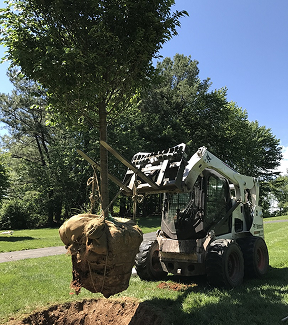
When you have a small yard, choosing the right tree matters more than ever. You want shade, seasonal interest, and beauty without the risk of a massive tree threatening your home, lifting your driveway, or overwhelming your outdoor space. At Rock Creek Tree, Turf & Landscape, we’ve been helping Montgomery County homeowners select and care for trees since 2005, and we know which species work best in smaller residential lots.
The key is finding trees that provide meaningful shade while staying proportional to your property. Small shade trees typically reach 20 to 35 feet at maturity, with compact canopies that won’t crowd out other plants or create ongoing maintenance headaches.
This guide covers the best small shade trees for Montgomery County yards, with a focus on native species that thrive in our climate and support local wildlife.
Why Choose Small Shade Trees?
Small trees offer benefits that large shade trees can’t match in limited spaces.
Perfect Scale for Small Properties
A 60-foot oak is magnificent in a park, but it’s overwhelming in a small townhouse yard. Small trees provide shade where you need it (over a patio, near a window, or along a driveway) without dominating the entire property.
Safer Near Structures
Small trees have smaller root systems and lighter canopies, which means less risk of foundation damage, sidewalk lifting, or branches falling on your roof during storms.
Easier Maintenance
Smaller trees mean less raking in fall, easier pruning, and lower removal costs if the tree ever needs to come down. They’re simply more manageable for homeowners who do their own yard work.
Fit Under Power Lines
Montgomery County has strict regulations about tree height near overhead utilities. Small trees can be planted safely under power lines without the risk of future conflicts or costly pruning.
Multiple Trees in One Yard
Instead of one massive tree, you can often fit two or three small trees in a yard, creating diverse planting zones and supporting more wildlife.
Top Native Small Shade Trees for Montgomery County
These native species are well-adapted to Maryland’s climate and soil, require less maintenance, and provide critical resources for local wildlife.
Eastern Redbud (Cercis canadensis)
Height: 20 to 30 feet
Spread: 25 to 30 feet
Sun: Full sun to light shade
Eastern redbud is one of the most beloved small trees in Montgomery County. In early spring (often March or early April), before leaves emerge, the tree erupts with brilliant pink to purplish flowers that grow directly on the branches and trunk. This early bloom provides crucial nectar for pollinators just emerging from winter.
The heart-shaped leaves start out reddish, turn dark green in summer, then shift to yellow in fall. The tree has a naturally rounded crown and requires little pruning once lower branches are removed for clearance.
Redbud grows best in moist, well-drained soil but adapts to a range of conditions. It tolerates the clay soil common in many Montgomery County yards. The tree is relatively fast-growing and can reach maturity within 10 to 15 years.
Best uses: Specimen tree, border planting, understory tree near larger shade trees, or accent tree near patios and entryways.
Cultivars to consider: ‘Forest Pansy’ has deep purple foliage, ‘Rising Sun’ features chartreuse to yellow leaves, and ‘Oklahoma’ is known for heat tolerance and wine-red flowers.
Serviceberry (Amelanchier species)
Height: 15 to 25 feet
Spread: 15 to 25 feet
Sun: Full sun to partial shade
Serviceberry is one of the most underrated small trees for Montgomery County landscapes. Also called shadblow, shadbush, or Juneberry, this multi-season performer offers white flowers in early spring, edible berries in June, and brilliant orange to red fall color.
The delicate white flowers appear in April, often before many other trees leaf out. By early summer, the tree produces small, sweet, blueberry-like fruits that birds (and people) love. If you want to harvest some for yourself, you’ll need to act fast before the birds get them all.
Serviceberry can be grown as a single-trunked small tree or as a multi-stemmed shrub. It requires little maintenance and adapts to wet to moderately dry soils. The smooth gray bark adds winter interest.
Common species include shadblow serviceberry (Amelanchier canadensis), which tolerates clay soil and wet sites; downy serviceberry (Amelanchier arborea), which grows as a short-trunked tree; and Allegheny serviceberry (Amelanchier laevis), which is less likely to sucker.
Best uses: Naturalized areas, rain gardens, understory planting, wildlife gardens, or as a specimen tree in small yards.
Wildlife value: Supports 58 wildlife species and 35 bird species in Virginia, making it one of the most ecologically valuable landscape trees.
Flowering Dogwood (Cornus florida)
Height: 15 to 30 feet
Spread: 20 to 30 feet
Sun: Partial shade to full sun
Flowering dogwood is iconic in Montgomery County. The white spring blooms (actually bracts surrounding tiny flowers) announce the season like no other tree. Those showy displays are followed by red berries that attract birds, and the tree’s horizontal branching creates a distinctive winter silhouette.
Dogwoods prefer moist, well-drained soil and benefit from afternoon shade in hot locations. They grow naturally as understory trees in forests, so they tolerate shade better than most flowering trees.
Fall color is typically red to purple. The tree grows slowly to moderately and can live for decades with proper care.
Best uses: Understory tree beneath taller shade trees, specimen planting, border tree, or grouped in naturalized settings.
Note: While dogwoods can be susceptible to anthracnose disease, concerns about this issue have largely subsided. Planting healthy stock from reputable nurseries and providing good air circulation reduces disease risk.
American Hornbeam (Carpinus caroliniana)
Height: 20 to 30 feet
Spread: 20 to 30 feet
Sun: Full sun to shade
American hornbeam is a tough, adaptable small tree that deserves more attention. Also called musclewood or ironwood (for its extremely hard, dense wood), this native tree has smooth, sinewy gray bark that looks like flexed muscle.
The tree tolerates a wide range of conditions, including wet soil, dry soil, and shade. It’s slow-growing but extremely long-lived and virtually pest-free. In fall, the leaves turn yellow, orange, or red.
American hornbeam produces small nutlets that provide food for birds and mammals. The dense canopy offers excellent shade despite the tree’s modest size.
Best uses: Shade gardens, wet areas, naturalized settings, or as a low-maintenance street tree alternative.
Sweetbay Magnolia (Magnolia virginiana)
Height: 20 to 30 feet in Montgomery County (can grow taller farther south)
Spread: 15 to 20 feet
Sun: Full sun to partial shade
Sweetbay magnolia is a semi-evergreen to deciduous small tree with creamy white, lemon-scented flowers that bloom from May through July. The flowers are smaller than those of southern magnolia but beautifully fragrant.
The tree adapts to both wet and dry conditions once established. It prefers moist, acidic soil and handles poorly drained sites better than many trees, making it a good choice for rain gardens or low spots in the yard.
In fall, red seeds attract birds and mammals. The glossy green leaves have silvery undersides that shimmer in the breeze. In mild winters, the tree may retain its leaves, providing winter interest.
Best uses: Rain gardens, wet areas, specimen planting, or near patios and windows where the fragrance can be enjoyed.
Kousa Dogwood (Cornus kousa)
Height: 15 to 30 feet
Spread: 15 to 30 feet
Sun: Full sun to partial shade
While not native, Kousa dogwood has earned a place in Montgomery County landscapes for its excellent disease resistance and long bloom period. It flowers several weeks after native dogwood, extending the spring show into early summer.
The white to pink bracts are showy and long-lasting. By late summer, the tree produces raspberry-like fruits that attract birds. Fall color ranges from red to purple.
Kousa dogwood is significantly more resistant to anthracnose and other diseases than flowering dogwood, making it a reliable choice for homeowners who want a dogwood but are concerned about disease issues.
Best uses: Specimen tree, border planting, or alternative to flowering dogwood in sites with disease pressure.
American Holly (Ilex opaca)
Height: 15 to 50 feet (smaller cultivars available)
Spread: 15 to 30 feet
Sun: Full sun to partial shade
American holly is a native evergreen that provides year-round shade and structure. The glossy, spiny leaves are iconic, and female trees produce bright red berries that persist through winter (if birds don’t eat them first).
Holly is slow-growing but extremely long-lived. It adapts to various soil types and handles urban conditions well. The dense evergreen canopy provides excellent privacy screening and windbreak benefits.
You’ll need both male and female trees for berry production, with one male pollinating multiple females.
Best uses: Privacy screening, evergreen specimen, wildlife cover, or windbreak planting.
Note: Choose smaller cultivars for truly small yards. The species can eventually reach 50 feet, though it takes many years.
Small Non-Native Shade Trees That Perform Well
While native trees are generally preferable, a few carefully selected non-natives work well in Montgomery County without invasive tendencies.
Japanese Maple (Acer palmatum)
Height: 15 to 25 feet (depending on variety)
Spread: 15 to 25 feet
Sun: Partial shade to full sun
Japanese maples bring elegance and seasonal color to small spaces. The delicate, lacy foliage comes in shades of green, red, purple, and variegated patterns. Fall color is spectacular, typically orange, red, or yellow.
Hundreds of cultivars are available with different leaf shapes, colors, and growth habits. Some are weeping, others upright. All prefer afternoon shade in hot climates and moist, well-drained, slightly acidic soil.
Japanese maples grow slowly and remain manageable. They’re ideal for creating focal points in small gardens.
Paperbark Maple (Acer griseum)
Height: 20 to 30 feet
Spread: 15 to 25 feet
Sun: Full sun to partial shade
Paperbark maple is prized for its exfoliating cinnamon-brown bark that peels in thin sheets, creating year-round visual interest. The trifoliate leaves turn brilliant red to orange in fall.
This slow-growing tree is drought-tolerant once established and virtually pest-free. It makes an excellent specimen tree for small yards.
Crabapple (Malus species and cultivars)
Height: 15 to 25 feet (depending on variety)
Spread: 15 to 25 feet
Sun: Full sun
Flowering crabapples offer abundant spring blooms in white, pink, or red, followed by small fruits that birds enjoy. Choose disease-resistant cultivars to avoid problems with apple scab, fire blight, and rust.
Modern crabapple cultivars have been bred for compact size, abundant flowers, persistent fruit, and disease resistance. They’re low-maintenance and provide multi-season interest.
What to Avoid in Small Yards
Some popular trees are simply too large or problematic for small spaces.
Skip These:
Red Maple and Sugar Maple: Both grow 40 to 60+ feet tall with wide canopies. They’re excellent trees for large properties but overwhelming in small yards.
Oaks (most species): White oak, red oak, and most other oaks eventually reach 50 to 80+ feet. They need room to spread and are best reserved for larger properties.
Norway Maple: This invasive tree spreads aggressively, creates dense shade that kills grass, and has shallow roots that damage pavement. Never plant Norway maple.
Bradford Pear (and other Callery Pear cultivars): Once popular, these trees are now recognized as invasive with weak wood that splits easily. They’re banned in some states and should be avoided.
Tulip Poplar: This fast-growing native can reach 100+ feet tall. It’s a wonderful tree for large properties but too big for small yards.
Silver Maple: Fast-growing but weak-wooded with aggressive surface roots that damage sidewalks and foundations. Not suitable for small residential lots.
Site Considerations Before Planting
Before you buy a tree, evaluate your property carefully.
Sunlight
How many hours of direct sun does the planting area receive? Some trees need full sun, while others tolerate or prefer shade.
Soil Drainage
Is the area well-drained, or does water sit after rain? Some trees handle wet soil; others need good drainage.
Space Above and Below
Check for overhead power lines. In Montgomery County, you should not plant trees taller than 25 feet under power lines.
Look down too. Are there underground utilities, sewer lines, or septic systems? Always call Miss Utility (811) before digging.
Mature Size
Visualize the tree at maturity. Will it have room to spread without crowding structures, other trees, or hardscaping?
Plant trees at least 15 to 20 feet from your house, and farther if possible. This prevents future problems with roots, branches, and foundation damage.
Wind and Privacy Needs
If you need a windbreak, consider evergreens like American holly. For privacy screening, choose trees with dense canopies or plant several trees in a row.
Planting Tips for Success
The right planting technique sets your tree up for decades of healthy growth.
When to Plant
In Montgomery County, plant trees in fall (September through November) or early spring (March through April). Avoid planting during summer heat (May through September).
How to Plant
Dig a hole as deep as the root ball but about twice as wide. This encourages lateral root growth.
Remove the tree from its container and gently loosen circling roots. Place it in the hole so the top of the root ball is level with the surrounding soil. Never plant too deep.
Backfill with native soil. Avoid adding amendments like compost to the hole, as this can discourage roots from spreading beyond the planting area.
Water thoroughly after planting. Apply a 2 to 3 inch layer of mulch around the base, keeping it several inches away from the trunk.
Early Care
Water deeply once or twice per week during the first two growing seasons. Young trees need consistent moisture to establish roots.
Prune only to remove dead or damaged branches during the first few years. Allow the tree to develop its natural form.
Monitor for pests and diseases, but avoid treating unless you identify a specific problem.
When to Call Rock Creek Tree
Professional help ensures your tree gets the best start and stays healthy for years.
We Can Help With:
- Site assessment and species selection for your specific property
- Professional planting that avoids common mistakes
- Pruning to develop strong structure as the tree matures
- Tree health evaluations if growth seems slow or problems develop
- Removal and replacement if an existing tree isn’t working out
At Rock Creek Tree, we’ve been planting and caring for trees across Montgomery County since 2005. We understand which species thrive in local conditions and how to set them up for long-term success.
Call Rock Creek Tree at 301-580-9498 or contact us for help selecting and planting the perfect small shade tree for your yard.
