
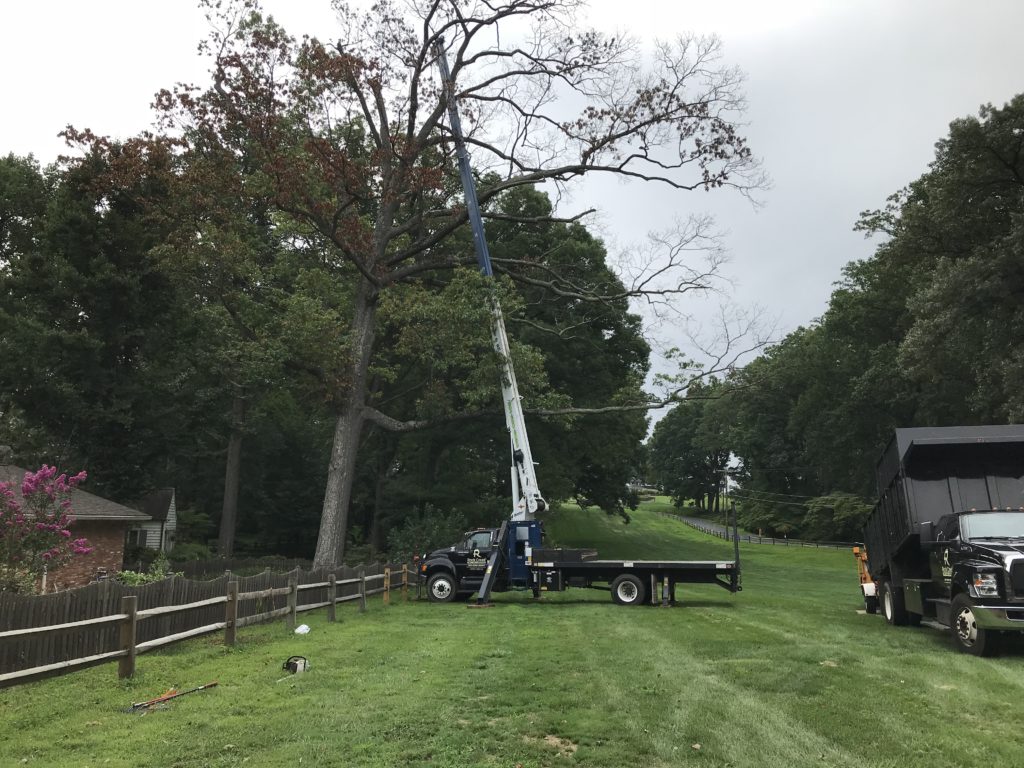
If you own property in Montgomery County, there are rules about what you can and can’t do with your trees. Most people don’t find out about these rules until they’re halfway through a project or getting ready to remove a tree, and by then it’s too late. Understanding the local tree ordinances can save you from fines, delays, and headaches down the road.
At Rock Creek Tree, Turf & Landscape, we work with Montgomery County’s tree laws every day. We’ve helped homeowners navigate permits, protected tree regulations, and HOA requirements for years. Here’s what you need to know about the tree ordinances in our area.
When Do You Need a Permit to Remove a Tree?
The short answer is: it depends on where the tree is and what you’re planning to do.
Trees on your private property
In most cases, you don’t need a permit to remove a tree that’s on your own land, as long as it’s not in a right-of-way, a historic area, or part of a development project. If it’s just a tree in your backyard that’s dying or causing problems, you can generally have it removed without county approval.
That said, there are exceptions. If you’re applying for a building permit, a sediment control permit, or doing any major construction or land disturbance, different rules kick in. We’ll get to those in a minute.
Street trees and right-of-way trees
If the tree is in the public right-of-way (the strip of land between the street and your property line, or in some cases extending onto your property), you absolutely need a permit. Street trees are protected under both the Montgomery County Roadside Tree Law and the Maryland Roadside Tree Law. That means you need two permits: one from Montgomery County Department of Permitting Services and one from the Maryland Department of Natural Resources.
This applies to planting, pruning, or removing any tree in the right-of-way. Even if the tree is technically on your property, if its trunk touches the right-of-way boundary, it’s considered a street tree and the permit requirement applies.
Trees in historic areas
If your property is in a designated historic area, you may need a Historic Area Work Permit from Montgomery Planning before you remove a tree. The rules vary depending on the specific historic district, so it’s worth checking before you do any tree work.
Champion trees
Montgomery County maintains a Champion Tree Register, which lists exceptionally large or old trees throughout the county. If your tree is on that list, you need special permission from the Montgomery Planning Forest Conservation Inspector before you can disturb or remove it.
The Forest Conservation Law: When Development Triggers Tree Requirements
If you’re doing any kind of development on your property, you might be subject to the Forest Conservation Law. This law applies to properties larger than 40,000 square feet (just under an acre) when you’re required to get a sediment control permit or submit a development application.
What counts as development? Building a new house, adding a major addition, putting in a driveway, grading your land, or any other activity that disturbs the soil enough to require a sediment control permit.
The Forest Conservation Law is designed to prevent net loss of forest in Montgomery County. If you’re removing trees as part of development, you may be required to plant new trees elsewhere on your property, protect existing trees, or pay into a reforestation fund. The specific requirements depend on how much tree canopy you’re disturbing and how much forest is already on your property.
This is where things get complicated, and it’s worth talking to a professional early in the planning process. If you wait until you’ve already started clearing trees, you could be hit with fines and required to restore what you removed.
The Tree Canopy Law: Replacing What You Disturb
Montgomery County also has a Tree Canopy Law that applies when you get a sediment control permit. This law requires you to plant new shade trees to offset the environmental impact of development.
The idea is simple: if you’re disturbing land and removing tree canopy, you need to plant trees somewhere else to make up for it. The law specifies how many trees you need to plant based on the amount of disturbance. Fees collected from this law are used to plant trees as close to the disturbed area as possible.
Most agricultural activities are exempt from the Tree Canopy Law, but if you’re building a house on a farm or doing other work that requires a sediment control permit, the law applies.
What About Hazardous Trees?
If a tree is dangerous, you can remove it without waiting for permits, but there are rules. The tree has to be evaluated by a Maryland Licensed Tree Expert (LTE) or a certified arborist, and they have to determine in writing that it’s a hazard. Once that determination is made, the hazard can be removed as soon as possible.
After the hazardous part is removed, the LTE has to notify the appropriate agency (county, state, or municipality) in writing within 14 days. Any additional work beyond what’s needed to eliminate the immediate hazard requires the normal permits.
This exception exists because public safety comes first. If a tree is about to fall on your house or is blocking a road, you shouldn’t have to wait weeks for permit approval. But the documentation and notification requirements are there to prevent people from claiming every tree is a hazard just to skip the permit process.
Who Can Do the Work?
In Maryland, anyone being paid to work on trees, evaluate trees, or give advice about trees must be licensed through the Maryland Department of Natural Resources Forest Service. This includes tree removal, pruning, and even consultations.
A Maryland Licensed Tree Expert (LTE) is required to have training, follow safety procedures, and carry appropriate insurance and bonding. If you hire someone who’s not licensed and something goes wrong (property damage, injury, improper tree work), you could be on the hook for the costs and any violations of tree ordinances.
When you hire Rock Creek Tree, you’re working with licensed professionals who know the local regulations and follow them. We handle the permit applications when they’re required, coordinate with the county and state, and make sure the work is done legally and safely.
Trees on Property Lines and Neighboring Property
Maryland follows the “Massachusetts Self-Help Rule” when it comes to trees that cross property lines. This means you can cut branches that hang over onto your property, but you have to stop at the property line unless you have your neighbor’s written permission. You also can’t damage or kill the tree in the process.
You cannot cut down a tree that’s on your neighbor’s property, even if the branches or roots are causing problems on your side of the line. If you trespass and remove trees or branches without the owner’s permission, you could be liable for surveys, appraisals, court costs, and up to triple the value of the trees you cut.
If a tree or branches fall from your neighbor’s property onto yours, it’s considered an “Act of God” in Maryland. That means you’re responsible for cleaning up and repairing any damage on your side of the property line, even if the tree came from next door.
HOA and Local Municipality Rules
Montgomery County has incorporated cities, towns, and villages within its borders, and many of them have their own tree ordinances on top of the county and state laws. Places like Chevy Chase, Takoma Park, and Rockville may have additional requirements for tree removal, even on private property.
If you live in one of these areas, check with your local municipality before removing a tree. The rules can be stricter than the county’s, and violations can result in fines.
Homeowners associations (HOAs) and civic associations often have their own rules too. Some HOAs require approval before you remove any tree, regardless of size or condition. Others have restrictions on certain tree species or requirements for replanting. If you’re in an HOA, check your covenants and architectural review guidelines before you start any tree work.
Ignoring HOA rules can lead to fines, legal action, or requirements to replant at your own expense. It’s easier to get approval upfront than to deal with the fallout later.
How to Stay Compliant
Navigating Montgomery County’s tree ordinances isn’t hard if you know what applies to your situation. Here’s a quick checklist:
Figure out where the tree is. Private property, right-of-way, historic area, or property line? The location determines which rules apply.
Check if you need permits. If the tree is in a right-of-way, if you’re doing development work, or if the tree is protected for any reason, you’ll need permits before you start.
Hire a licensed professional. Anyone doing paid tree work in Maryland must be licensed. Don’t hire an unlicensed tree service, no matter how cheap they are.
Check with your HOA or local municipality. If you’re in an incorporated area or an HOA, find out if there are additional requirements.
Document everything. If you’re removing a hazardous tree, get it evaluated and documented by a licensed professional. If you’re applying for permits, keep copies of all approvals.
Final Thoughts
Montgomery County’s tree ordinances exist to protect the urban forest, maintain tree canopy, and ensure public safety. Most of the time, they don’t get in the way of routine tree care or removals. But when permits are required, it’s worth doing things the right way.
At Rock Creek Tree, we help homeowners navigate these regulations all the time. We know which permits are needed, how to get them, and how to stay compliant with county, state, and local rules. If you’re planning tree work and you’re not sure what applies, give us a call. We’ll walk you through it and make sure everything is handled correctly.
Need help with tree removal or have questions about permits? Call Rock Creek Tree, Turf & Landscape at 301-580-6023 or contact us for expert guidance.
