
When we remove a tree from your property, the work doesn’t end when the trunk hits the ground. You’re left with tons of wood, branches, leaves, and debris that has to go somewhere. Most homeowners don’t think about what happens to all that material once it’s off their property, but it’s actually a question worth asking.
At Rock Creek Tree, Turf & Landscape in Montgomery County, we handle tree removal every week. We don’t just cut trees down and drive away. We process the wood, clean up the debris, and make sure as much of it as possible gets put to good use instead of ending up in a landfill. Here’s what actually happens to your tree after we remove it.
The Tree Comes Down in Pieces
The first thing to understand is that tree removal isn’t like cutting down a Christmas tree in the woods. We don’t just make one cut and watch it fall. Most residential tree removals are done piece by piece to avoid damaging your house, fence, driveway, or anything else nearby.
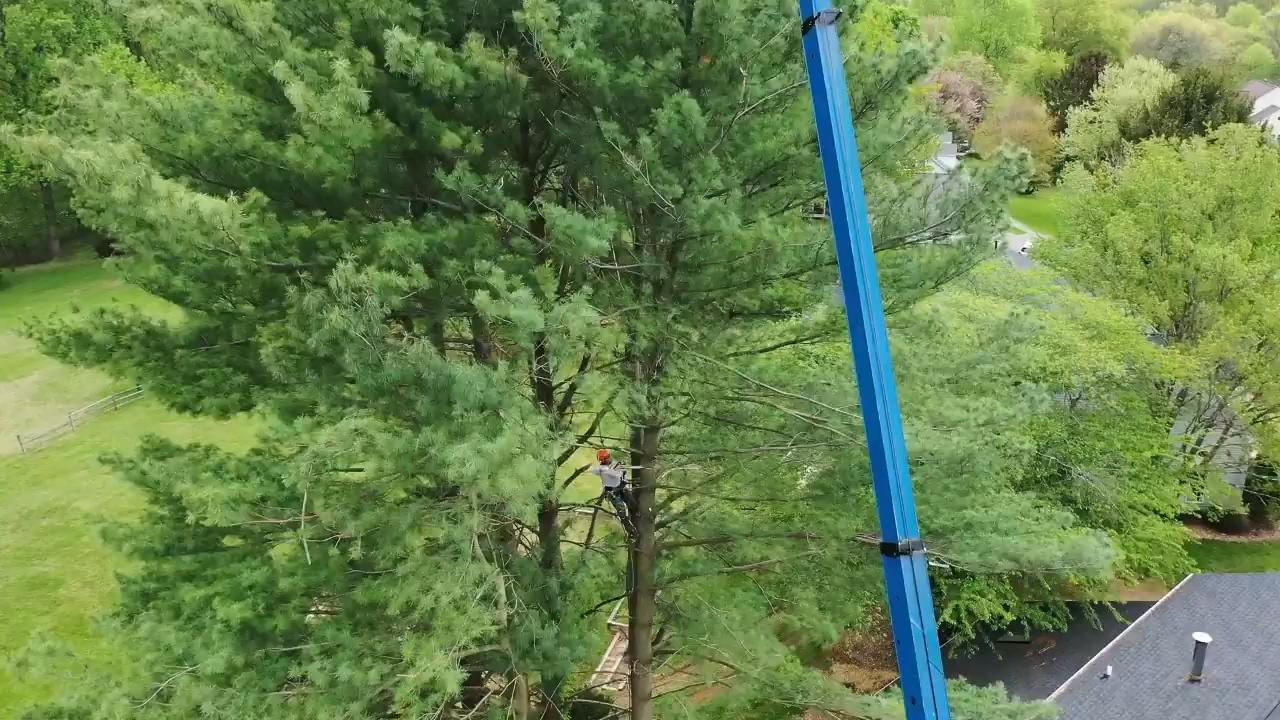
We start at the top and work our way down, rigging sections of the tree and lowering them with ropes or cranes. Each piece gets dropped into a safe zone where it won’t hit anything. By the time we’re done, you’ve got a pile of logs, a bigger pile of branches, and wood chips scattered around the work area.
All of that has to be dealt with. Here’s where it goes.
The Logs: Firewood, Lumber, or Mulch
The trunk and larger branches are the most valuable parts of the tree. What happens to them depends on the species, the size, and the condition of the wood.
Firewood
If the wood is from a good firewood species (oak, ash, maple, cherry, hickory), and if the homeowner wants it, we’ll often cut the logs into firewood-length rounds and leave them stacked on the property. A lot of people heat with wood or just like having firewood for their fire pit, so this is a popular option.
If you don’t want the wood, we take it. Some of it goes to our yard where we split and season it for our own use or sell it locally. Some gets donated to people who need firewood. Wood-burning is still common in rural parts of Montgomery County, and there’s always demand for good hardwood.
Lumber
Occasionally, we’ll remove a tree that’s large enough and straight enough to be milled into lumber. This doesn’t happen often with residential trees because most yard trees have nails, wires, or other metal embedded in them from old fences, clotheslines, or tree swings. Metal ruins saw blades, so most sawmills won’t touch yard trees.
But if the tree is clean and the wood is valuable (black walnut, cherry, white oak), we’ll sometimes connect the homeowner with a portable sawmill operator who can turn the logs into boards. It’s not common, but it’s a nice option when it works out. Your tree becomes furniture, flooring, or cabinetry instead of firewood.
Mulch or Compost
If the wood isn’t good for firewood or lumber (soft species like pine, poplar, or willow, or wood that’s rotted or damaged), it gets chipped. We run it through a wood chipper along with the branches, and it becomes mulch.
The Branches: Chipped into Mulch
Branches, limbs, and smaller wood all go through the chipper. We feed everything into the machine, and it comes out the other side as wood chips. This is the bulk of what gets hauled away after a tree removal.
What Happens to the Wood Chips?
Wood chips have a lot of uses. Here’s where they typically end up:
Mulch for landscaping. Fresh wood chips make great mulch. We use them on our own properties, offer them to the homeowner if they want them, and deliver loads to landscaping projects around Montgomery County. Mulch helps retain soil moisture, suppresses weeds, and breaks down over time to improve the soil.
Compost facilities. A lot of our wood chips go to composting operations. Mixed with other organic material, wood chips break down into nutrient-rich compost that gets used in gardens, farms, and landscaping.
Biomass energy. Some wood waste gets sent to facilities that burn it for energy. It’s not the most common use, but it’s an option for low-quality wood that can’t be recycled any other way.
Erosion control. Wood chips are sometimes used for erosion control on construction sites, trails, or areas where vegetation hasn’t been established yet.
Can You Keep the Wood Chips?
Absolutely. If you want the chips, we’ll leave them in a pile on your property. A lot of homeowners use them for mulching garden beds, paths, or around other trees. Just keep in mind that fresh wood chips can temporarily tie up nitrogen in the soil as they decompose, so it’s best to let them age for a few months before using them around plants, or apply them as a top layer without mixing them into the soil.
The Leaves and Small Debris: Composted
Leaves, twigs, and small debris get separated out and composted. This stuff breaks down quickly and turns into rich organic matter that can be used to improve soil.
We don’t usually haul leaves to a landfill. There’s no reason to. They’re biodegradable, and composting them is the smart move both environmentally and economically.
The Stump: Ground into Mulch
If you’re having the stump ground (which we recommend), that creates another pile of material. Stump grindings are a mix of wood chips and dirt, and they’re not quite the same as clean wood chips from the branches.
What Happens to Stump Grindings?
Left on site. Most homeowners opt to leave the grindings in the hole where the stump was. We grind the stump down below ground level, backfill the hole with the grindings, and cover it with topsoil and grass seed. The grindings break down over time and settle, but they fill the space and prevent a big crater in your yard.
Hauled away. If you don’t want the grindings, we can haul them off. They usually go to composting facilities where they break down along with other yard waste.
Used as mulch. Some people use stump grindings as mulch, but they’re not ideal. They’re mixed with soil, they compact more than clean wood chips, and they don’t look as good. If you’re mulching a flower bed, you’re better off with clean chips. But for filling low spots or mulching a back corner of the property, they work fine.
What We Don’t Do: Send It to the Landfill
Here’s the thing: we avoid landfills whenever possible. Sending organic material to a landfill is a waste. Wood, branches, and leaves are all biodegradable and recyclable. There’s no reason to bury them in a hole when they can be turned into firewood, mulch, or compost.
That said, there are times when some material ends up in the landfill. If the tree was diseased and we’re trying to prevent the spread (like with Emerald Ash Borer), some municipalities require that infested wood be destroyed or buried to keep the pest from spreading. But even in those cases, we follow local regulations and dispose of it properly.
For the most part, though, tree waste gets recycled. It’s better for the environment, it’s better for the community, and honestly, it’s better for us. Recycling wood is often cheaper than landfill fees, and we’d rather see the material put to good use.
The Environmental Angle: Why It Matters
Trees are carbon sinks. While they’re growing, they absorb carbon dioxide from the atmosphere and store it in their wood. When a tree is removed, that carbon is still locked up in the wood, at least temporarily.
When we turn that wood into firewood, lumber, or mulch, the carbon stays sequestered for years. Firewood eventually gets burned and releases the carbon, but that’s no different than if the tree had died and decomposed naturally. Lumber can lock up carbon for decades or even centuries if it’s turned into furniture or building materials.
Even wood chips and compost release carbon slowly as they break down, and in the meantime, they’re improving soil health, which helps other plants grow and sequester more carbon. It’s all part of the cycle.
Sending wood to a landfill, on the other hand, doesn’t make sense. When organic material breaks down in a landfill without oxygen, it produces methane, which is a much more potent greenhouse gas than carbon dioxide. Recycling wood keeps it out of landfills and puts it back into productive use.
What About Trees with Disease or Pests?
If the tree we’re removing is infested with pests like Emerald Ash Borer or infected with certain diseases, we handle the wood differently. The goal is to prevent the pest or pathogen from spreading to other trees.
EAB-infested ash: In some cases, infested wood needs to be chipped on site and either buried, burned, or sent to an approved facility. We follow state and local regulations on this. The wood can’t be transported long distances or sold as firewood because that’s how EAB spreads.
Diseased wood: Depending on the disease, we may chip the wood and compost it (heat from composting kills most pathogens), or we may dispose of it separately to be safe.
We take this seriously because we don’t want to be responsible for spreading pests or diseases to other properties. If there’s any question about how to handle diseased or infested wood, we check with the Maryland Department of Agriculture or local extension services to make sure we’re doing it right.
Can You Keep the Wood?
Yes. If you want the wood from your tree, just let us know before we start the job. We can cut the logs to firewood length and stack them for you. If you want the wood chips, we’ll leave them in a pile.
Keep in mind that if you’re taking firewood, it’s your responsibility to season it properly (let it dry for 6-12 months) before you burn it. Green wood doesn’t burn well and creates a lot of smoke and creosote buildup in your chimney.
If you’re taking wood chips, make sure you have a plan for them. A full-grown tree can produce a massive pile of chips, and if you don’t need that much mulch, it’s going to sit there for a while.
The Bottom Line: Your Tree Gets Recycled
When we remove a tree, almost all of it gets put to good use. The logs become firewood or lumber. The branches and smaller wood become mulch. The leaves and debris get composted. The stump grindings fill the hole or go to compost.
Very little ends up in a landfill, and that’s by design. Trees are too valuable to waste. Even a dead or dying tree has wood that can heat a home, mulch that can feed a garden, and organic matter that can improve soil.
At Rock Creek Tree, we handle tree removal responsibly. We take care of the cleanup, we recycle the material, and we leave your property looking better than we found it. If you need a tree removed, call Rock Creek Tree, Turf & Landscape at 301-945-7677 or contact us to get started. We’ll take care of your tree from start to finish, and we’ll make sure it doesn’t go to waste.
