
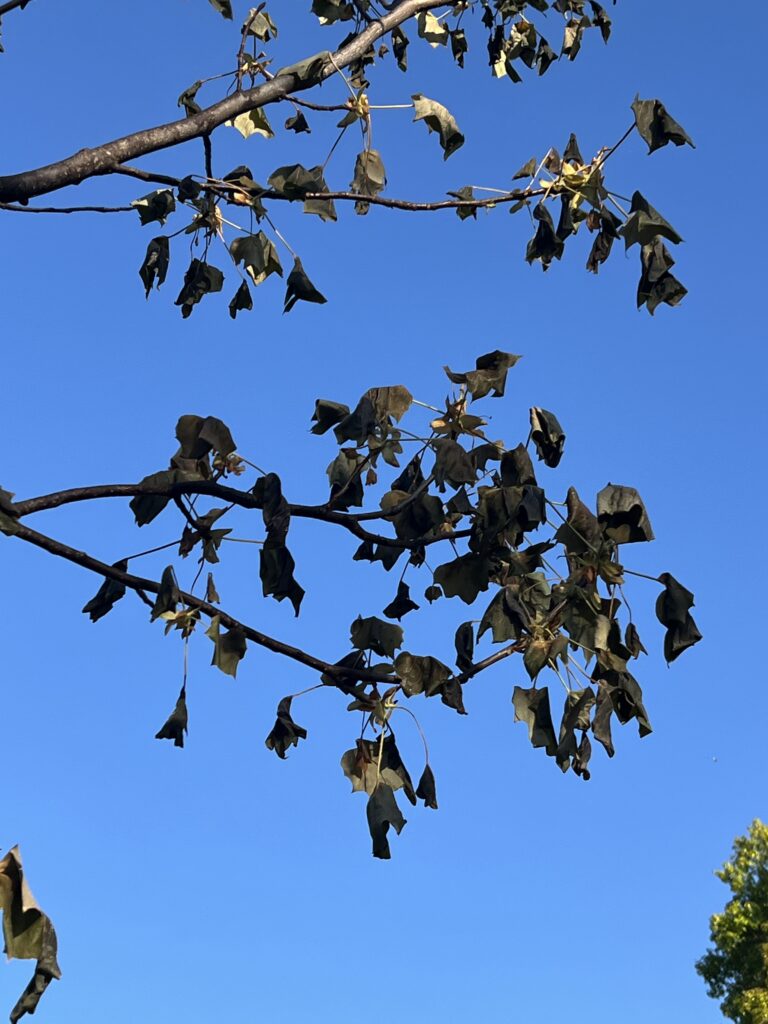
If you’ve walked outside this week and noticed your trees looking rough with brown leaves, wilted new growth, or foliage that just doesn’t look right, you’re not alone. We’ve been getting a high volume of calls from homeowners in Rockville, Kensington, Bethesda, Potomac, and all across Montgomery County asking the same question: “What’s wrong with my tree?”
The good news? In most cases, your tree is probably fine.
What you’re seeing is late spring frost damage, and it’s affecting trees all over the area.
What Happened?
This spring threw us a curveball. We had an early warm spell that pushed a lot of trees to leaf out ahead of schedule. Buds opened, new leaves unfurled, and everything looked great. Then the temperature dropped hard. We had a late-season frost that caught those tender new leaves completely exposed.
New growth on trees is delicate. It’s soft, thin, and full of water. When temperatures drop below freezing, the water in those cells freezes and expands, rupturing the cell walls. The result is leaves that turn brown, wilt, curl up, or look scorched even though they were healthy just days before.
This kind of damage happens fast. One cold night is all it takes.
Which Trees Are Affected?
Not all trees react the same way to frost. Some species are more vulnerable than others, especially if they leaf out early in the season.
The trees we’re seeing the most damage on right now include:
Tulip poplars. These trees are notorious for getting hit by late frosts. They leaf out early, and the new growth is extremely sensitive to cold. If your tulip poplar looks like it got torched, that’s typical frost damage.
Walnuts and hickories. Both of these species flush out early and take frost damage hard. The new leaves turn black or brown almost immediately after a freeze.
Maples. Red maples and sugar maples are common in Montgomery County, and both can show frost damage on new growth. You’ll see browning at the tips and edges of leaves.
Oaks. Some oak species, especially red oaks, can be affected. The damage is usually less severe than on tulip poplars or walnuts, but it’s still noticeable.
Ornamental trees. Dogwoods, redbuds, and magnolias can all take frost damage, especially if they were already flowering or leafing out.
What Does Frost Damage Look Like?
Frost damage is pretty easy to recognize once you know what you’re looking for. Here’s what we’re seeing on trees around Montgomery County right now:
Brown or black leaves. The new foliage turns brown, starting at the tips and edges and sometimes spreading across the entire leaf. In severe cases, the leaves look almost burned.
Wilted or curled leaves. Damaged leaves lose their rigidity and hang limp or curl up.
Stunted growth. New shoots that were just starting to emerge may stop growing and turn brown.
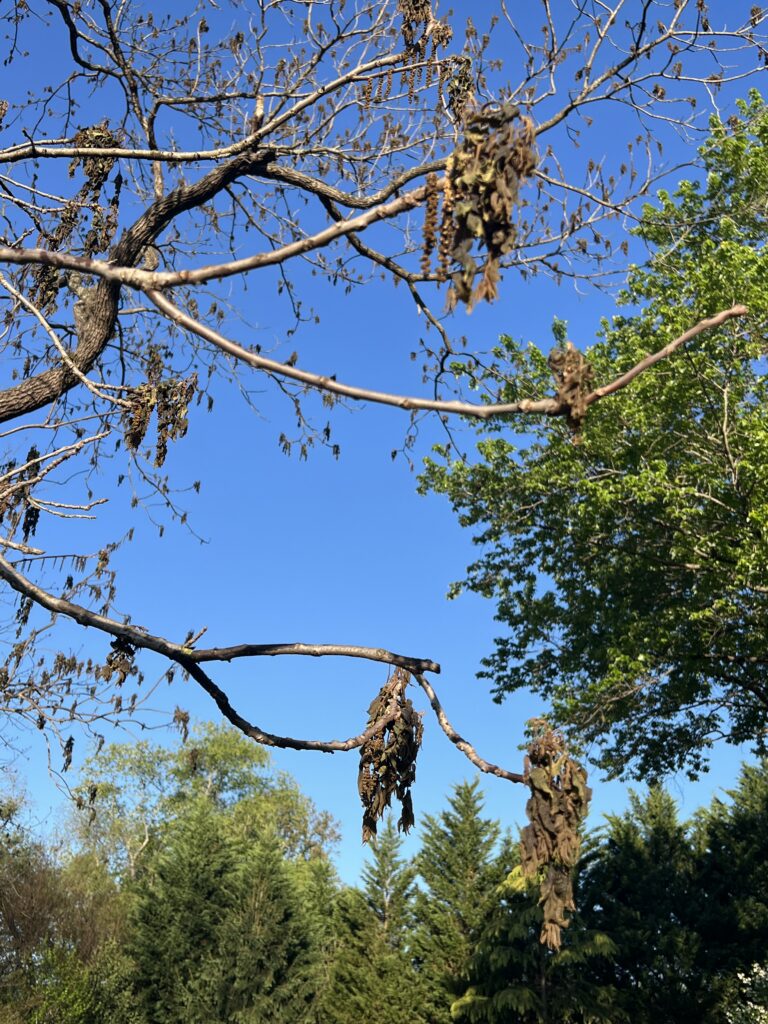
Spotty canopy. The damage isn’t always uniform. You might see some branches that look fine while others are completely brown. This happens because different parts of the tree were at different stages of leafing out when the frost hit.
The key thing to remember is that this damage is on the new growth. The buds, branches, and trunk of the tree are usually fine. It’s just the soft, vulnerable leaves that got hit.
Is Your Tree Going to Die?
Almost certainly not.
This is what we’re telling homeowners who call us worried about their trees: frost damage looks bad, but it’s usually temporary and cosmetic. Healthy trees have a backup plan.
When the first flush of leaves gets damaged, the tree will push out a second flush of growth within a few weeks. It’s basically hitting the reset button. The damaged leaves will either drop off or stay on the tree looking brown for a while, but new buds will open and the tree will leaf out again.
This process takes energy, and it’s stressful for the tree, but most healthy trees handle it without any long-term problems. By late May or early June, your tree should have a full canopy again, and you’ll hardly remember this happened.
When Should You Be Concerned?
While most trees bounce back just fine, there are a few situations where frost damage might be a sign of a bigger issue or where the tree might need some help.
No re-leafing by late May. If your tree doesn’t push out new growth by the end of May, something else might be going on. The tree could have been stressed or unhealthy before the frost, or there might be root or trunk damage you’re not seeing.
Large sections of the canopy remain bare. If significant portions of the tree don’t leaf out at all, that’s a red flag. It could mean those branches were already dead or dying before the frost.
The tree was already struggling. If your tree was showing signs of decline before the frost (thinning canopy, dead branches, discolored bark), the frost damage could push it over the edge. Stressed trees don’t recover as easily as healthy ones.
Young or newly planted trees. Young trees have less energy in reserve than mature trees. If a young tree takes heavy frost damage, it might struggle to recover, especially if it’s still establishing its root system.
If any of these situations apply to your tree, it’s worth having it evaluated by a professional. We can assess the tree’s overall health and let you know whether it’s going to recover or if there’s a deeper problem.
What You Should (and Shouldn’t) Do
The best thing you can do for a frost-damaged tree is leave it alone and let it recover on its own. Here’s our advice:
Don’t prune yet
A lot of homeowners see brown leaves and immediately want to start cutting. Resist that urge. The tree is still figuring out which branches are viable and which aren’t. If you start pruning now, you might remove branches that would have leafed out just fine.
Wait until the tree has pushed its second flush of leaves. Once you can see what’s actually dead and what’s just delayed, then you can prune out any branches that didn’t recover.
Don’t fertilize
Throwing fertilizer at a stressed tree seems like it would help, but it can actually make things worse. The tree is using its energy to produce new leaves, and adding fertilizer forces it to put out even more growth when it’s already stretched thin. Let the tree recover at its own pace.
Do water if it’s dry
If we go through a dry spell in the next few weeks, make sure your tree is getting enough water. Producing a second flush of leaves takes moisture, and a tree that’s dealing with drought stress on top of frost damage is going to have a harder time recovering. A deep watering once a week is usually enough.
Do watch for pests and disease
Stressed trees are more vulnerable to pests and diseases. Keep an eye out for signs of trouble: unusual insect activity, fungal growth, oozing sap, or further decline. If you see anything that doesn’t look right, call a professional.
This Isn’t Unusual
Late spring frosts aren’t common, but they’re not unheard of either. We’ve seen this happen before in Montgomery County, and we’ll probably see it again. It’s one of those weather events that catches everyone off guard, but most trees are tough enough to handle it.
The trees in this area have survived worse. They’ve made it through droughts, ice storms, hurricanes, and everything else Maryland weather throws at them. A late frost is stressful, but it’s not a death sentence.
When to Call a Professional
If you’re still concerned about your tree after reading this, or if you’re seeing signs that go beyond typical frost damage, give us a call. At Rock Creek Tree, Turf & Landscape, we evaluate trees all the time. We can tell you whether your tree is recovering normally or if there’s a bigger issue that needs to be addressed.
We’re also here if you have a tree that was already struggling before the frost and now looks like it’s not going to make it. Sometimes frost damage is the final straw for a tree that was already in decline, and in those cases, removal might be the safest option.
Here’s when you should reach out:
- Your tree hasn’t leafed out by late May
- Large sections of the canopy are still bare
- You’re seeing other signs of trouble (cracks, leaning, fungal growth, pests)
- The tree is near your house, driveway, or a high-traffic area and you’re concerned about safety
- You just want peace of mind and a professional opinion
We’ve been serving Rockville, Bethesda, Kensington, Potomac, Silver Spring, and surrounding areas of Montgomery County since 2005. We know the trees in this area, we know how they respond to stress, and we know what to look for when evaluating whether a tree is going to recover.
Final Thoughts
The brown leaves you’re seeing on your trees right now are alarming, but in most cases, they’re not a reason to panic. Late spring frost damage is temporary. Your tree will likely push out new growth in the next few weeks, and by early summer, this will all be a memory.
In the meantime, be patient. Let the tree do its thing. And if you have any concerns or if your tree isn’t bouncing back the way it should, we’re here to help.
Need your tree evaluated? Call Rock Creek Tree, Turf & Landscape at 301-580-6023 or contact us for a professional assessment. We’ll take a look, give you an honest evaluation, and help you figure out the best next step.
