
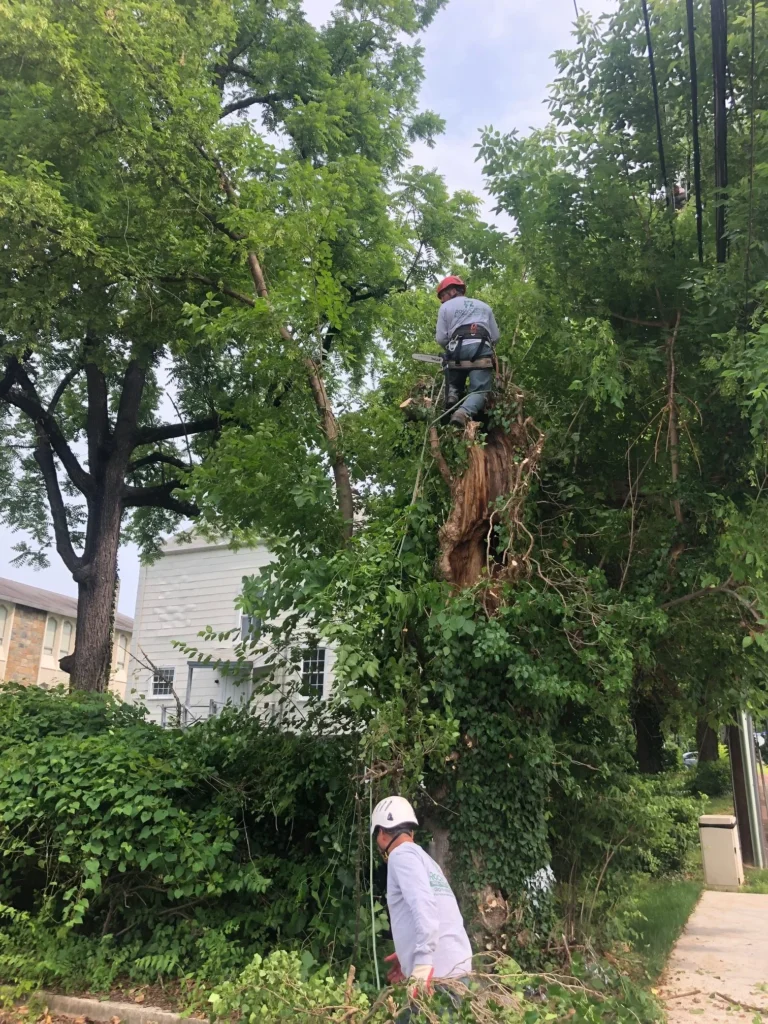
Proper tree pruning is one of the most important things you can do to keep your trees healthy, safe, and looking their best. At Rock Creek Tree, Turf & Landscape, we’ve been pruning trees across Montgomery County since 2005, and we’ve seen firsthand how the right cuts at the right time make all the difference.
This guide covers everything you need to know about tree pruning from why it matters to when to do it, what tools you’ll need, and how to make proper cuts that help your trees thrive.
Why Tree Pruning Matters
Pruning isn’t just about making your trees look nice, though that’s certainly part of it. Strategic pruning keeps your trees healthy, prevents safety hazards, and extends their lifespan.
Health Benefits
Removing dead, diseased, or damaged branches stops problems from spreading. When you prune out weak or crossing limbs, you improve airflow through the canopy, which reduces the risk of fungal infections and pest infestations.
Good pruning also encourages stronger growth. By thinning the crown and removing competing branches, you help the tree direct energy toward developing a solid structure.
Safety First
Dead or weakened branches don’t just look bad, they’re dangerous. A heavy limb hanging over your roof, driveway, or power lines is an accident waiting for the next storm. Pruning removes these hazards before they become costly problems.
Property Protection
Branches that scrape against your house damage siding and shingles. Limbs hanging too close to your roof drop debris that clogs gutters and creates moisture problems. Regular pruning keeps your tree at a safe distance from structures.
Improved Appearance
A well-pruned tree has a balanced, natural shape that enhances your property’s curb appeal. Whether you’re maintaining ornamental trees or shaping young growth, thoughtful pruning creates a cleaner, more attractive landscape.
When to Prune Trees
Timing matters. Pruning at the wrong time can stress your tree, encourage disease, or eliminate next season’s flowers.
Late Winter to Early Spring (Best for Most Trees)
The dormant season late winter to early spring, before new growth starts it is ideal for most deciduous trees. During this time:
- Trees heal quickly once growth resumes
- There’s no foliage blocking your view of the branch structure
- Disease pathogens and insects are less active
- You won’t stimulate unwanted growth
In Montgomery County, this typically means February through early March.
After Flowering (Spring-Blooming Trees)
If your tree blooms in spring, it likely sets flower buds the previous fall. Pruning during winter would remove those buds and eliminate your spring flowers.
For trees like dogwoods, redbuds, and flowering cherries, prune immediately after they finish blooming. This gives them the rest of the growing season to develop next year’s buds.
Summer Pruning (Light Touch Only)
Summer pruning is generally reserved for minor corrections and removing small dead branches or lightly shaping growth. Heavy summer pruning removes leaves that are manufacturing food for the tree, which can slow growth and stress the plant.
However, summer pruning does have specific uses. It can slow the development of overly vigorous branches and is sometimes recommended after spring-blooming trees flower.
Special Timing Considerations
Oak Trees: Only prune oaks during winter dormancy (December through February) to avoid oak wilt disease, which spreads through beetles attracted to fresh cuts during warmer months.
Elm Trees: Prune in late fall or winter to prevent Dutch elm disease, which is also spread by beetles active in spring and summer.
Evergreens: Most evergreens need minimal pruning. Prune in late winter before new growth begins, or lightly prune in spring after new growth appears.
When You Can Always Prune
Dead, damaged, or broken branches can and should be removed any time of year. If a limb is a safety hazard, don’t wait for the “right season.” Get it taken care of immediately.
Types of Pruning Cuts
Understanding the different types of cuts helps you prune with purpose.
Crown Thinning
Crown thinning removes select branches throughout the canopy to reduce density. This improves light penetration and air circulation, which keeps the tree healthier and reduces wind resistance during storms.
Thinning cuts are made at the branch collar (where the branch meets the trunk or a larger limb), removing the entire branch cleanly.
Crown Raising
Crown raising removes lower branches to create clearance beneath the tree. This is useful for improving sightlines, allowing foot traffic, or clearing space above driveways and walkways.
Be careful not to remove too many lower branches at once, as this can stress the tree.
Crown Reduction
Crown reduction shortens branches to reduce the overall height or spread of the tree. This is done by cutting back to a lateral branch that’s at least one-third the diameter of the branch being removed.
Crown reduction is a last resort and should only be done when absolutely necessary, as it alters the tree’s natural shape.
Crown Cleaning
Crown cleaning removes dead, diseased, and damaged wood from the canopy. This is routine maintenance that keeps your tree safe and healthy.
Heading Cuts vs. Thinning Cuts
Thinning cuts remove an entire branch back to the trunk or a lateral branch. These cuts encourage less regrowth and maintain the tree’s natural form. They’re generally preferred for most pruning.
Heading cuts remove part of a branch, cutting back to a bud or smaller lateral branch. These cuts stimulate new growth below the cut and are used to direct growth or control size. Use heading cuts sparingly, as they can result in dense, weak growth if overused.
How to Make Proper Pruning Cuts
The way you make a cut determines how well the tree heals.
Understanding the Branch Collar
The branch collar is the swollen area where a branch meets the trunk or a larger limb. This tissue contains cells that seal the wound and prevent decay from entering the tree.
Never cut into the branch collar. Your final cut should be just outside this area, preserving the collar while removing the branch cleanly.
The branch bark ridge is the raised line of bark visible at the top of the branch union. Your cut should angle away from this ridge.
The Three-Cut Method (For Larger Branches)
For branches larger than one inch in diameter, use the three-cut method to prevent bark from tearing.
Cut 1 (Undercut): About 12 inches from the branch collar, make a cut on the underside of the branch, cutting about one-third of the way through. This prevents the bark from peeling down the trunk when the branch falls.
Cut 2 (Top Cut): Move a few inches farther out from the undercut. Cut down from the top of the branch until it falls away. The branch should break cleanly at your undercut.
Cut 3 (Final Cut): With the weight removed, make your final cut just outside the branch collar. Cut at a slight angle to prevent water from pooling on the wound.
For Small Branches
Branches under one inch in diameter can be removed with a single cut using bypass pruners or loppers. Position the cut just outside the branch collar and make a clean, angled cut.
Essential Pruning Tools
Having the right tools makes the job safer and produces better results.
Hand Pruners (Bypass Type)
Use bypass pruners for branches up to about half an inch in diameter. Bypass pruners have two curved blades that slide past each other like scissors, creating a clean cut.
Avoid anvil-type pruners, which crush the branch against a flat surface and can damage bark.
Loppers
Loppers are long-handled pruners for branches between half an inch and about one and a half inches in diameter. The extended handles provide extra leverage for thicker cuts.
Pruning Saw
For branches over one and a half inches, use a pruning saw. Hand saws with curved blades that cut on the pull stroke are easier to control and safer to use.
Pole Pruner
Pole pruners extend your reach for branches that are too high to reach from the ground but don’t require a ladder. Use them carefully as material cut overhead can fall on you.
Chainsaws (Professionals Only)
Chainsaws are dangerous and should only be used by trained professionals. If a branch requires a chainsaw, it’s time to call Rock Creek Tree.
Tool Maintenance
Keep your tools sharp and clean. Dull blades tear and crush plant tissue, which slows healing and invites disease. Disinfect your tools between cuts when working with diseased wood to prevent spreading pathogens.
What to Prune
Knowing what to remove is just as important as knowing how to cut.
Always Remove
- Dead branches: They’re a falling hazard and offer no benefit to the tree
- Diseased or damaged wood: Stops problems from spreading
- Broken branches: These won’t heal properly and can become entry points for decay
- Rubbing or crossing branches: Constant friction creates wounds that invite disease
- Water sprouts: Vigorous vertical shoots growing from the trunk or main branches
- Suckers: Shoots growing from the base of the trunk or roots
Consider Removing
- Branches growing toward the center: These crowd the canopy and reduce airflow
- Weak or narrow branch angles: Branches attached at angles less than 30 degrees are prone to breaking
- Competing leaders: Multiple upright branches competing to be the main trunk
- Branches too close to structures: Anything scraping your house or hanging over your roof
Common Pruning Mistakes to Avoid
Topping
Never cut all the branches back to stubs or reduce the tree’s height by removing the entire top. This practice, called topping, is extremely harmful. It:
- Creates large wounds that don’t heal properly
- Stimulates weak, poorly attached regrowth
- Removes the tree’s food-producing leaves
- Often leads to tree death or structural failure
If a tree is too tall, crown reduction performed by professionals is the proper alternative or consider removing and replacing the tree.
Flush Cuts
Cutting flush with the trunk removes the branch collar, which the tree needs to seal the wound. Flush cuts take longer to heal and are more likely to develop decay.
Leaving Stubs
Leaving a long stub beyond the branch collar prevents proper healing. The stub will die back, and decay can spread into the trunk.
Over-Pruning
Removing too much of the canopy at once stresses the tree and can permanently damage its health. As a general rule, don’t remove more than 25% of the tree’s canopy in a single year.
Pruning at the Wrong Time
Pruning oaks in summer, for example, exposes them to oak wilt. Pruning spring bloomers in winter eliminates their flowers. Timing matters.
Trees That Need Special Attention
Fruit Trees
Fruit trees benefit from annual pruning to maintain productivity and shape. Prune during late winter while the tree is dormant. Remove crossing branches, open up the center for sunlight, and thin out dense areas.
Over-pruning stimulates excessive leaf growth at the expense of fruit. Under-pruning creates a dense canopy that blocks light and reduces fruiting.
Flowering Trees
Timing depends on when the tree blooms:
- Spring bloomers (dogwood, redbud, cherry): Prune right after flowering
- Summer bloomers (crape myrtle): Prune in late winter before new growth
Evergreens
Most evergreens require little pruning. Pines can be pruned in spring before new needles mature. Spruces and firs can be pruned in late winter or early spring.
Avoid heavy pruning on evergreens since they often don’t regrow from old wood.
When to Call a Professional
Some pruning jobs are too dangerous or complex for homeowners to handle safely.
Call Rock Creek Tree if:
- The branch requires a chainsaw
- You need to climb the tree or use a tall ladder
- The tree is near power lines
- Large branches overhang your house or other structures
- The tree is diseased or damaged and you’re unsure how to proceed
- You’re uncomfortable with the scope of the work
Professional arborists have the training, equipment, and insurance to handle high-risk pruning safely. We understand tree biology, proper cutting techniques, and how to preserve the tree’s health and structure.
The Long-Term Benefits of Proper Pruning
When you prune correctly and consistently, you’re investing in your tree’s future.
- Stronger structure that withstands storms and heavy snow
- Better health with improved airflow and disease resistance
- Longer lifespan for your trees
- Enhanced property value from well-maintained landscaping
- Reduced risk of property damage and injury
Regular pruning throughout a tree’s life is easier and less stressful than major corrective work on a mature, neglected tree.
Rock Creek Tree Pruning Services
At Rock Creek Tree, we’ve been pruning trees across Montgomery County for nearly two decades. Our certified crew understands Maryland’s native species, local growing conditions, and the seasonal challenges your trees face.
We provide professional pruning services for residential and commercial properties throughout Rockville, Bethesda, Potomac, Gaithersburg, and surrounding areas.
Whether you need routine maintenance, storm damage cleanup, or help with a challenging pruning project, we’re here to help.
Contact Rock Creek Tree at 301-945-7677 or Contact Us for a free estimate.
